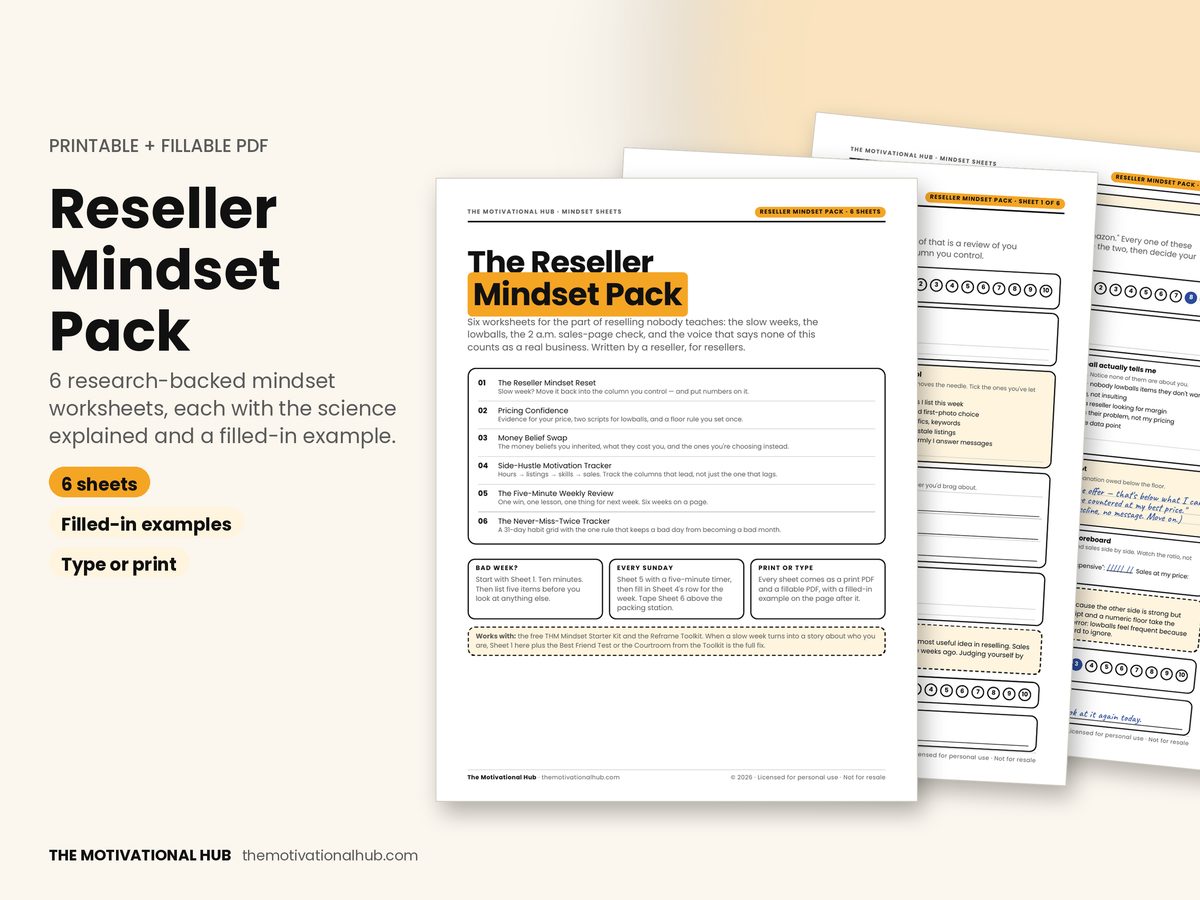
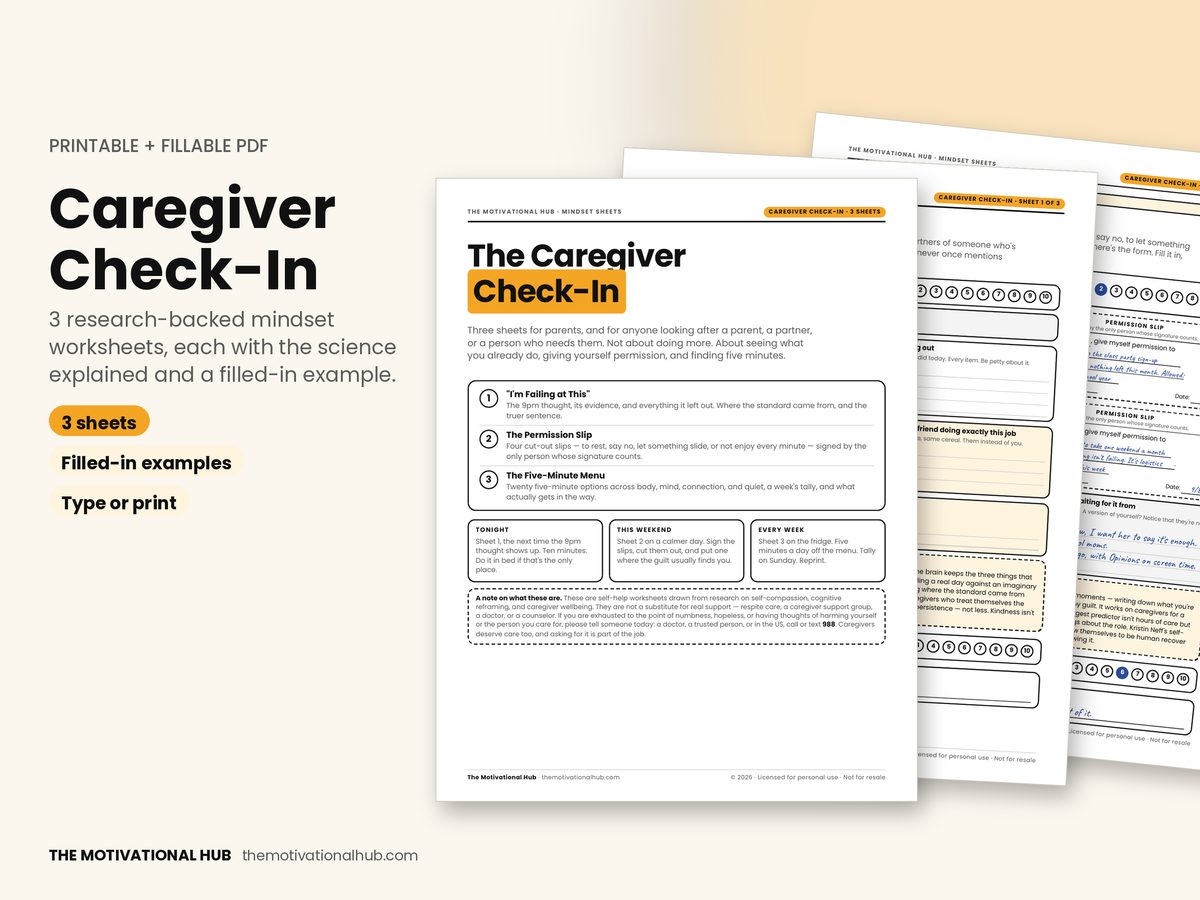
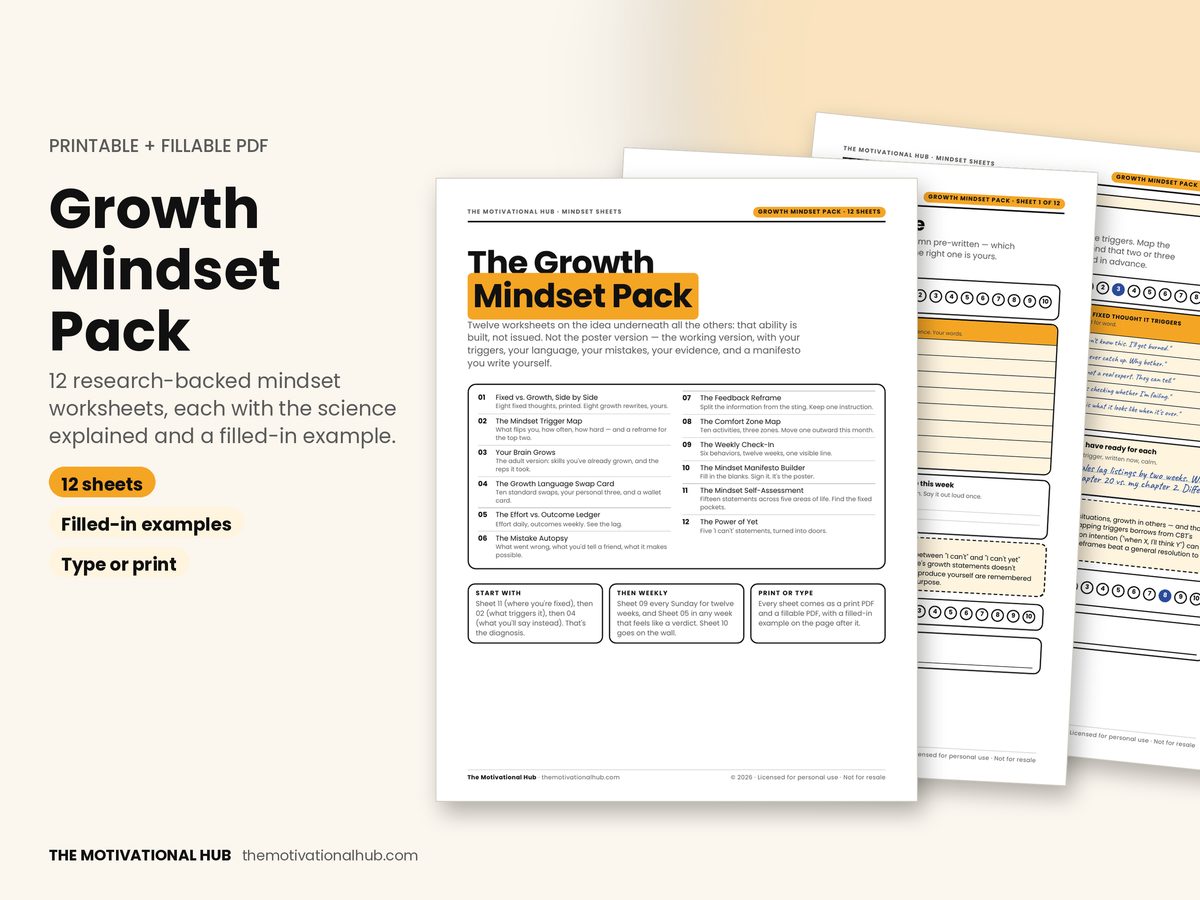
Mindset Sheets · Pack
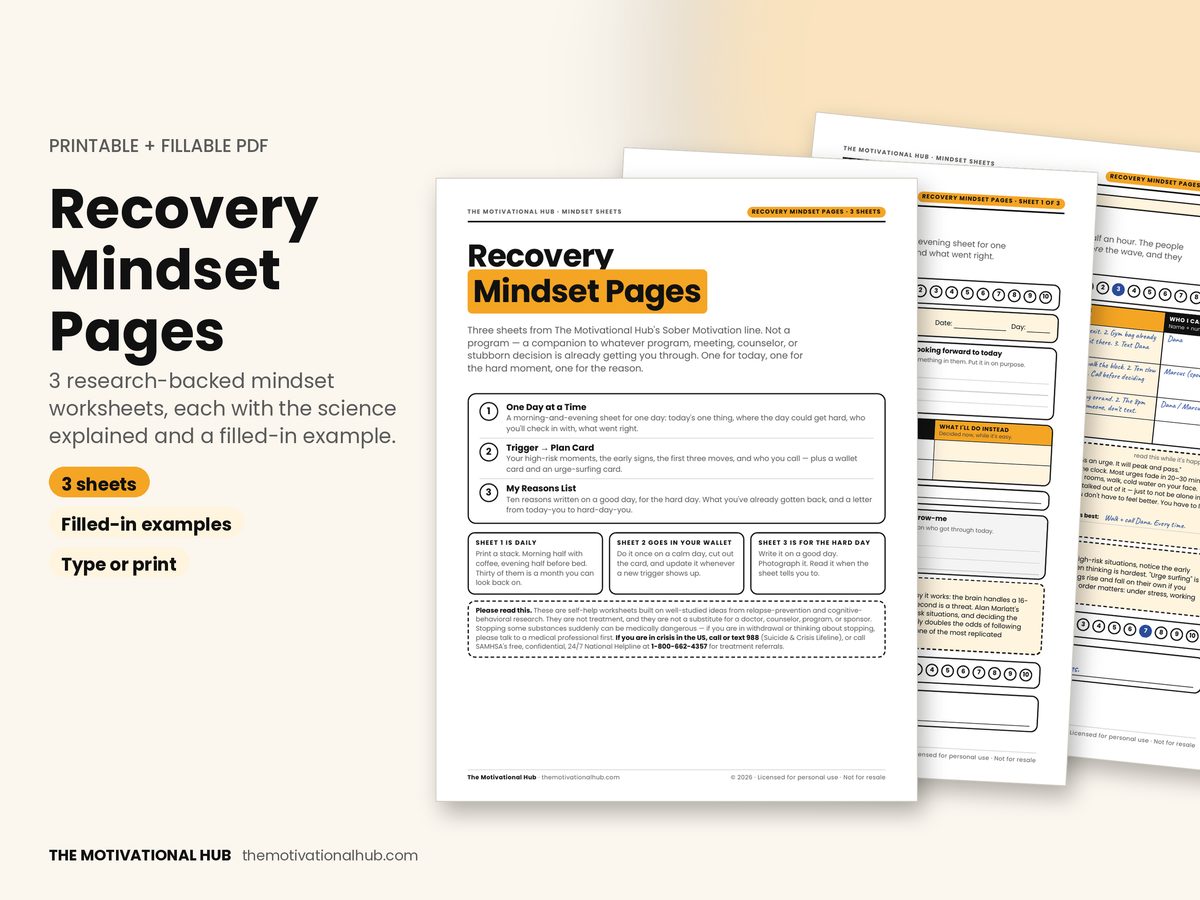
Three sheets built as a companion to recovery, not a program for it: a one-day-at-a-time daily page, a trigger-to-plan card that fits in a wallet, and a reasons list for the hard day. The cover carries the 988 and SAMHSA numbers.
What's inside
Not forever. Not the rest of the year. Today. This is a morning-and-evening sheet for one day: the one thing, the hard hour, the person you'll check in with, and what went right. Tomorrow gets its own sheet.
An urge is a wave: it builds, it peaks, it passes — usually inside half an hour. The people who get through it aren't stronger. They decided what to do before the wave, and they wrote it down. This is where you write it down.
On a good day, you know exactly why you're doing this. On a hard day, you can't remember a single reason. That's not weakness — that's how memory works under stress. So write the reasons down on a good day, and read them on the hard one.
Instant download. Licensed for personal use. Questions: hello@themotivationalhub.com
What every sheet has
The same 1–10 question at the top and the bottom. The gap between the two numbers is the sheet working.
Two sentences of the actual research, Dweck, Beck, Gollwitzer, Neff, in plain English on every page.
Every sheet is followed by a finished one. Real-looking, not perfect. Read it first when you're tired.
Each sheet ends with the one thing you'll do in the next 24 hours. Thinking changes nothing; that one action does.
Also in the Hub
A note on what these are. The Mindset Sheets are self-help worksheets built on well-studied methods (cognitive behavioral techniques, growth-mindset research, implementation intentions, self-compassion work) written in plain language for everyday use. They are not therapy or treatment. If low mood, anxiety, or hopelessness is constant or getting in the way of daily life, please talk to a doctor or a licensed counselor. In the US, call or text 988 in a crisis.